64 G*Power Walk-Throughs, Effect Sizes, and the Sample-Size Justification Paragraph Your Committee Demands
"How many participants do I need?" Most students guess: a round number, the figure a friend used, whatever the journals seem to expect. Then a committee member, an ethics board, or a grant reviewer asks where the number came from. A sample size is not a guess. It is a number you derive from four linked parameters and then justify in writing.
The Sample Size & Power Analysis Workbook is not a statistics textbook. It is the working surface for doing the calculation: 64 fill-in templates across thirteen chapters. One fictional trial is worked from the first estimate of an effect size to the finished justification paragraph, a second is worked through correlation and regression, and a third shows how to justify a qualitative sample without a power analysis.
Who this workbook is for: Master's and doctoral students writing a quantitative or mixed-methods proposal, researchers in health, nursing, psychology, education and the social sciences, and supervisors who want a student's sample-size reasoning laid out step by step.
A priori, sensitivity and compromise analyses, the inputs each test needs, and why "observed power" is not one of them.
t-tests, ANOVA, ANCOVA, correlation, multiple and logistic regression, chi-square and proportions, each with its inputs, its menu path and a worked result.
Inflate your number the right way, work back to how many people you must screen, check you can actually recruit them week by week, and justify a qualitative sample by saturation and information power.
G*Power is free software from Heinrich-Heine-Universität Düsseldorf; this workbook is independent of its developers. The worked studies are invented to demonstrate the method, so check every figure in current software for your own study.
With The Research Data Collection & Management Workbook
The workbook sets up how data is gathered and stored. The kit picks up the moment the raw file exists.
$12See the kit →
With The Statistical Test Selection Workbook
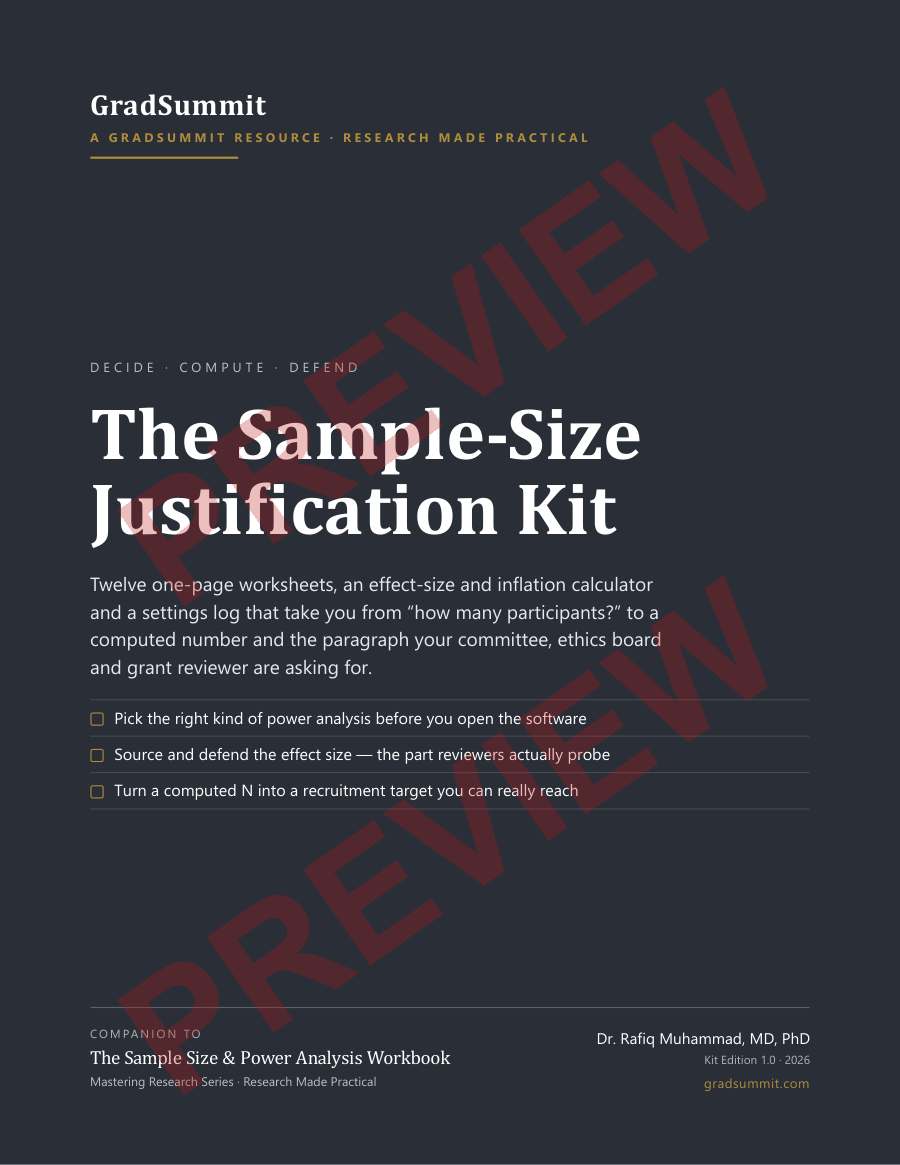
The workbook helps you choose the test. The kit sizes the study for the test you chose.
$12See the kit →
With The Systematic Review & Meta-Analysis Protocol Workbook
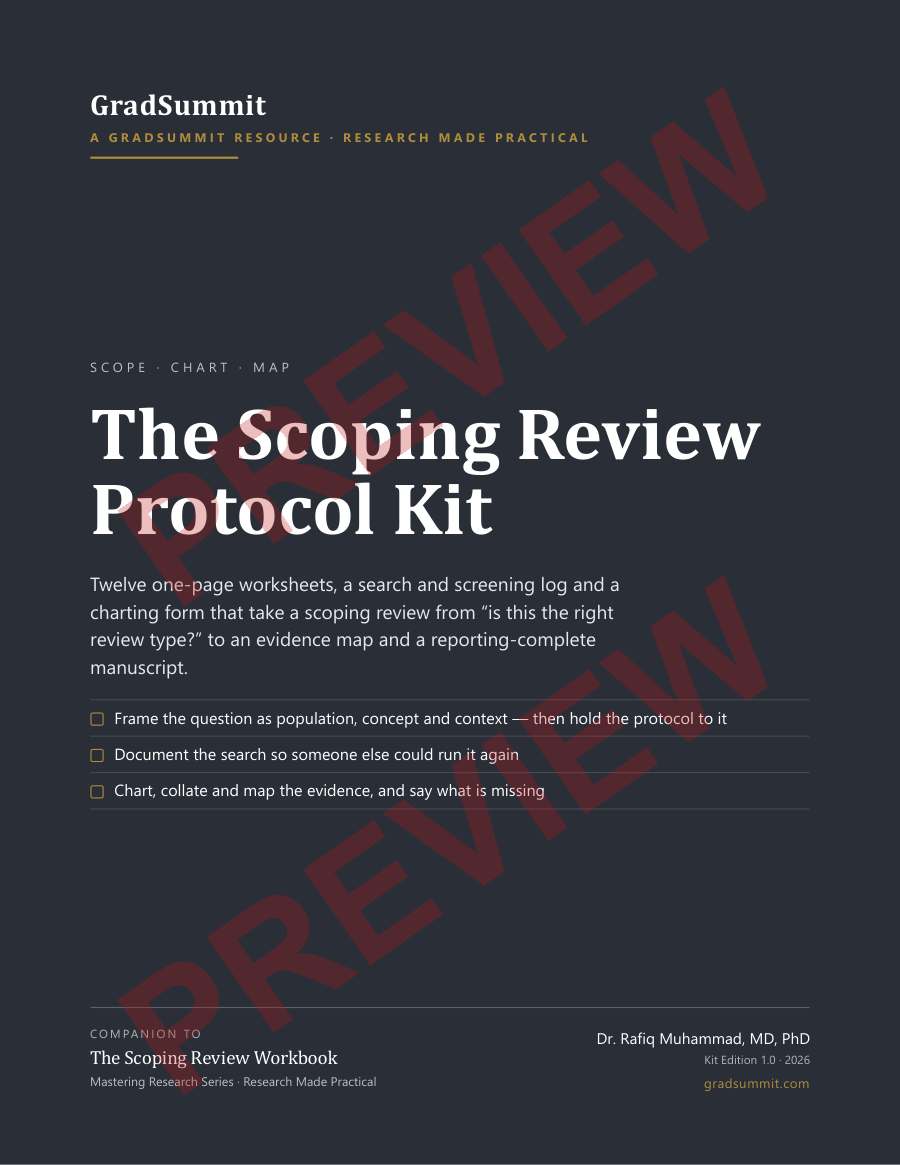
The workbook covers systematic reviews and meta-analysis in depth. The kit is the lighter route when you need to chart what exists rather than pool results.
$12See the kit →
With The Academic Writing & Scholarly Style Workbook
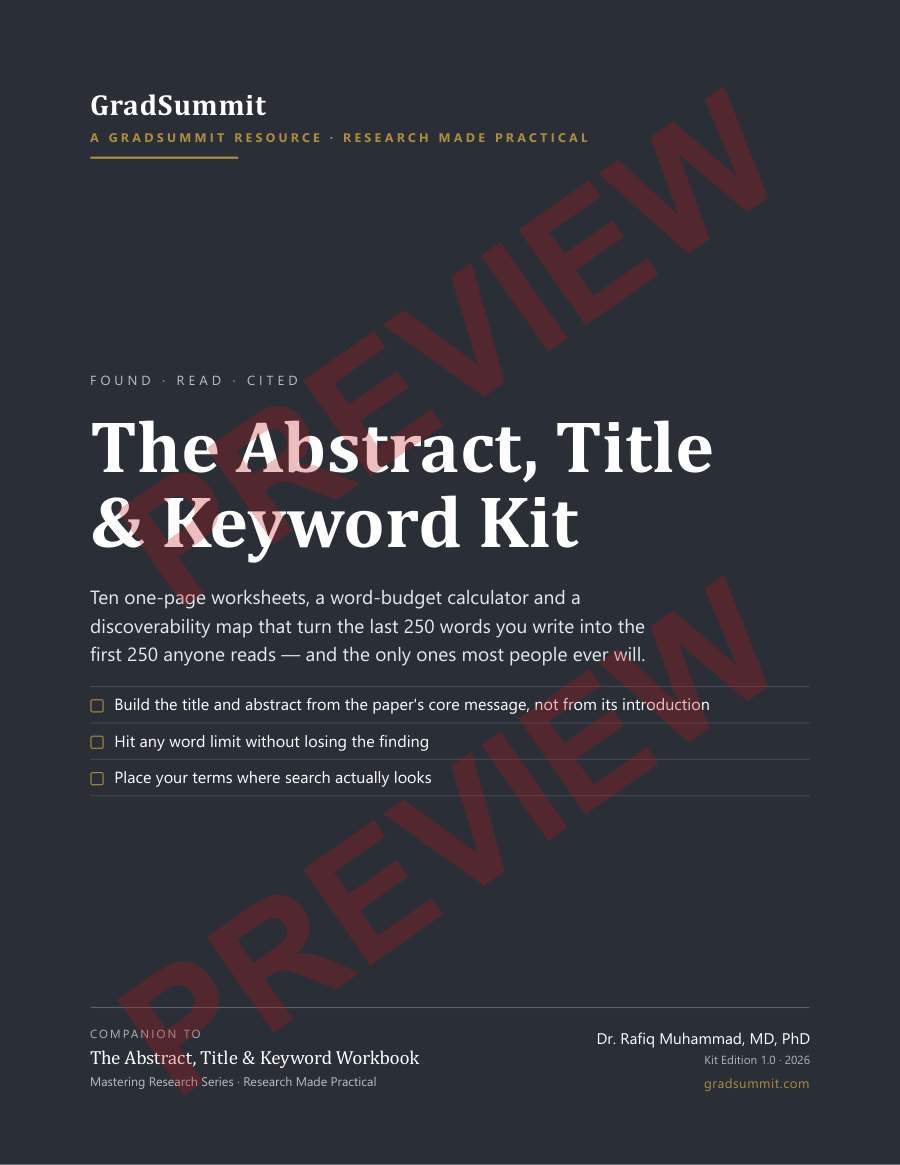
Use the workbook while drafting the paper; use the kit at the end, for the title, abstract and keywords.
$7See the kit →
With The Dissertation & Thesis Workbook
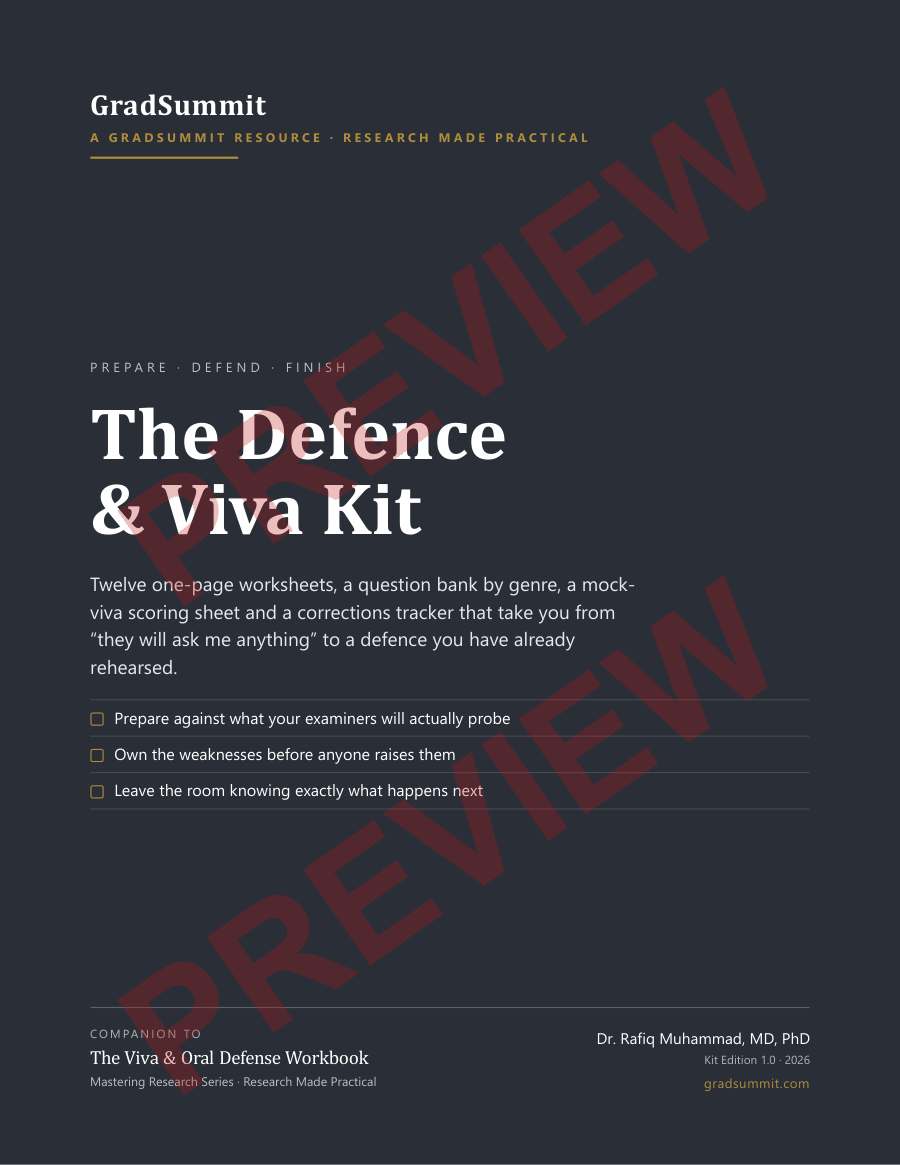
Reach for it once the thesis is submitted and the examination date is set.
$15See the kit →